 Skip to content
“Amazon organic keywords” I just paused all ads on my main listing and watched something incredible happen. Sales didn’t collapse—they stabilized. Rankings didn’t tank—they held. And most surprisingly, my organic units actually started increasing while my ad costs dropped to zero.
This goes against everything the “gurus” tell you about Amazon. They’ll insist you need to constantly feed the PPC machine to survive. They’re wrong. After 12+ years of building Amazon brands and taking one client from $3 million to $24 million in sales over two years, I’ve discovered what most sellers miss: Amazon isn’t an advertising platform. It’s a ranking game.
The proof is in my own performance data. While most sellers are trapped in what I call the “ad dependency hamster wheel”—spending more each month just to maintain the same sales levels—I’ve learned to build organic foundations that sustain growth without constant ad spend. By mastering the placement and density of Amazon Organic Keywords, I’ve been able to shift listings from “rented” visibility to “owned” authority.
In this post, I’ll show you the exact framework that transformed my client’s business, why most sellers are stuck in expensive cycles, and the five critical factors destroying your Amazon Organic Keywords rank right now. Mastering these elements is the difference between “renting” your visibility through high ad spend and “owning” your category through permanent placement.
The Amazon Organic Ranking Reality Check (Most Sellers Get Wrong)
Why Your Current Organic Strategy Is Failing
Here’s the uncomfortable truth: most sellers treat Amazon like Google Ads when they should be treating it like Google Search. They focus on cost-per-click instead of conversion rates, impressions instead of rankings, and short-term sales instead of long-term visibility. By ignoring the importance of Amazon Organic Keywords, they trap themselves in a cycle of “renting” traffic rather than “owning” their category.
I see this pattern repeatedly in account audits. Sellers using ad-only strategies watch their Total Advertising Cost of Sales (TACoS) creep up month after month while their organic rankings remain flat or decline. They’re literally paying more for the same results.
The data from my client calls shows a different story: sellers who build organic foundations first see sustained growth that compounds over time. When you get organic ranking right, ads become optional, not essential. Developing a strategy focused on Amazon Organic Keywords allows you to stop “renting” your customers from PPC and start “owning” your category through permanent placement.
The Hidden Cost of PPC-Only Strategies
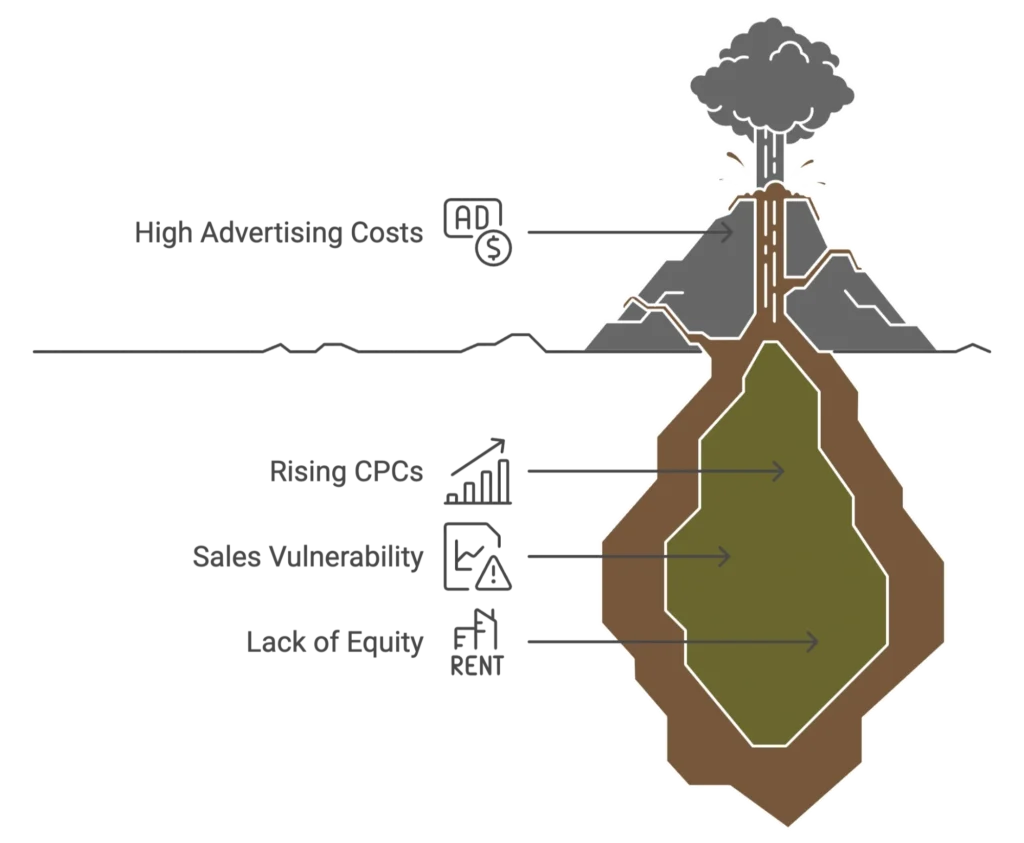
When you’re locked into the ad spend cycle, three things happen that I’ve witnessed across hundreds of accounts:
First, your costs inflate. As more sellers bid on the same keywords, CPCs rise. I’ve tracked categories where cost-per-click has nearly doubled in just 18 months.
Second, you become vulnerable. Budget cuts, cash flow issues, or account problems instantly translate to sales drops. I’ve seen million-dollar brands lose most of their sales overnight when ad accounts got suspended.
Third, you never build real equity. Unlike organic rankings, which compound over time, ad positions disappear the moment you stop paying. You’re essentially renting visibility instead of owning it.
The 5 Critical Factors Destroying Your Organic Rank

Factor #1: Honeymoon Period Mismanagement
Amazon gives every new listing a 90-day “honeymoon period” where the algorithm is most responsive to signals. Most sellers waste this opportunity by launching at target prices with no reviews and weak conversion signals.
I launch at aggressive introductory prices and enroll immediately in Amazon Vine. This strategy accomplishes two things: it maximizes sales velocity during the critical ranking window, and it generates authentic reviews from Vine members. Mastering the Amazon Organic Keywords landscape starts with these two levers, as they provide the raw data the algorithm needs to justify placing you on Page 1.
This approach is exactly how I helped transform one clothing brand that was struggling with stockouts. They had multiple colors and sizes, but they didn’t understand that Amazon ranks each product ASIN separately. When their main color—their MVP variation—would sell out, their entire listing would crash, even though they had other colors available. To master Amazon Organic Keywords, you must realize that a “parent” listing is merely a container; the real ranking power is fueled by the individual “child” ASINs.
Factor #2: Inventory Distribution Sabotage
This is the invisible killer that destroys organic rankings, and most sellers don’t even know it’s happening.
Amazon doesn’t just look at whether you have inventory—they evaluate how that inventory is distributed across fulfillment centers. When you’re running low on stock, Amazon can’t promise fast delivery to all regions. Some customers see two-day shipping while others see five-day delivery, which kills your conversion rate and negatively impacts your Amazon Organic Keywords. As geographic availability drops, the algorithm pulls back your visibility because you can no longer provide a consistent customer experience.
In my recent analysis of client accounts, I found that delivery time differences directly impact rankings. That extra wait time kills conversions, and Amazon notices when competitors can deliver faster. They start favoring those listings in search results. This is a critical component of mastering Amazon Organic Keywords, as your “delivery promise” has become a literal weight in the A10 algorithm’s relevancy calculation.
As I tell my clients: “Understocking doesn’t just cost you sales today. It costs you rankings, momentum, and long-term growth.”
Factor #3: Mobile-First Optimization Blind Spots
With most Amazon traffic coming from mobile devices, your listings must be optimized for the 5-second attention span. Yet most sellers still design for desktop, burying key benefits below the fold and using images that don’t impact on small screens.
In my podcast discussions, I consistently emphasize this point: “Most people never even scroll past the title on mobile.” Your main image and title need to convert instantly, or you’ve lost the sale.
Factor #4: Backend Catalog Architecture Chaos
Here’s something I discovered through managing hundreds of accounts: Amazon’s algorithm relies heavily on proper categorization and backend data. When sellers skip optional fields or misconfigure browse nodes, they’re essentially invisible for related searches.
What’s worse is that Amazon’s bots regularly “update” missing fields with incorrect data. I’ve seen listings automatically recategorized, completely changing their competitive landscape and tanking their rankings. In one case, a product went from “Pajama Sets” to “Pajamas Sets”—a small change that created massive ranking problems.
I even built a Chrome extension to check competitors’ backend alt text because I found that big sellers maximize every character while smaller sellers leave fields blank or repeat the same words.
Factor #5: Post-Honeymoon Recovery Strategy Gap
What happens after day 90? Most sellers hit a wall because they never developed a transition strategy from honeymoon momentum to sustained organic growth.
The key insight from my client transformations is understanding when and how to scale back ad spend without losing ranking momentum. This requires tracking organic units separately from paid units and making data-driven decisions about budget allocation.
The Organic Ranking Framework: From Ad-Dependent to Algorithm-Preferred

Phase 1: Foundation Building (Days 1-30)
Strategic Pricing: Launch below target price to maximize velocity signals during the most critical ranking window. The clothing client I mentioned learned this lesson the hard way—after implementing proper pricing strategy during launches, their stockout issues became manageable.
Review Acquisition: Enroll in Amazon Vine immediately after brand registry approval. Set Vine pricing at introductory levels to encourage positive feedback.
Conversion Optimization: Focus on mobile-first listing design. As I consistently advise clients, optimize for the 5-second mobile attention span, not desktop browsing behavior.
Targeted Ad Strategy: Use ads to discover high-converting keywords and build initial momentum, not just drive immediate sales.
Phase 2: Momentum Acceleration (Days 31-90)
Keyword Rank Building: Double down on ad spend for keywords showing strong conversion rates and organic movement.
Strategic Price Increases: Gradually raise prices while monitoring conversion impact, aiming for target pricing by day 90.
Inventory Management: Maintain sufficient stock across all variations. The $3M to $24M client transformation happened partly because we solved their chronic stockout issues.
Catalog Optimization: Refine backend keywords and categories based on early performance data. This includes maximizing all available character limits—something most sellers completely ignore.
Phase 3: Sustainable Domination (Days 91+)
Ad Transition Strategy: Systematically reduce spend on keywords where organic ranking can sustain traffic. This is where the real magic happens—transitioning from ad dependency to organic dominance.
Competitive Defense: Monitor competitor movements and adjust strategy to maintain market position.
Profitability Optimization: Focus on margin improvement while maintaining ranking strength.
Real Case Study: From Stockouts to Sustainable Growth
One of my most successful transformations involved a clothing company doing $3 million annually when we started working together. They had a fundamental problem: they were constantly running out of stock.
Here’s what was happening: They had multiple colors and sizes, but when their main color—their MVP variation—would sell out, their entire listing would crash. It didn’t matter that they had other colors available. Amazon ranks each product ASIN separately, so when that key variation disappeared, their rankings tanked.
The solution required a complete mindset shift. Instead of thinking about individual products, we had to treat each variation like its own business. We implemented proper inventory planning, strategic pricing during restocks, and catalog architecture that supported sustainable growth.
The results: In two years, we took them from $3 million to $24 million in sales. The key wasn’t spending more on ads—it was building organic foundations that could scale.
Another client I’m currently working with demonstrates this principle perfectly. Last year, they did $23 million in sales. This year, they’re tracking toward $45 million, with a 2-year goal of hitting $100 million. Part of this growth came from a strategic shift in their Amazon Organic Keywords strategy and fulfillment: moving some heavier items from merchant fulfillment to Seller Fulfilled Prime. Even before receiving the Prime badge, just offering premium shipping options gave sales a noticeable lift.
The Backend Optimization Most Sellers Miss
In my audits, I consistently find that sellers are leaving money on the table in their Enhanced Brand Content (EBC). Most people don’t even know about alt text optimization—you can put 100 characters in each line, and Amazon gives you multiple opportunities to include relevant keywords.
When I audit competitor listings using my Chrome extension, I find that big sellers fill every available character while smaller sellers leave them blank or repeat the same words. They’re missing crucial ranking signals that Amazon actively looks for.
FAQ Section
Q: How long does it take to build sustainable organic rankings on Amazon?
A: Based on my client experiences, you can achieve meaningful organic movement within 90 days with proper strategy. However, sustainable dominance—like the $3M to $24M transformation—typically requires 6-12 months of consistent execution across all ranking factors.
Q: Can you really succeed on Amazon without continuous ad spend?
A: Absolutely. I’ve demonstrated this with my own listings by pausing ads entirely while maintaining strong organic performance. But this only works after building a strong organic foundation first.
Q: What’s the biggest mistake new sellers make with organic ranking?
A: Launching at target prices with no review strategy. This wastes the critical honeymoon period when Amazon is most willing to test your listing for various keywords. The clothing client’s stockout issues stemmed from this exact problem.
Q: How do you know when organic ranking is strong enough to reduce ads?
A: Monitor your organic units separately from paid units. When you consistently see organic sales maintaining or growing while ads are scaled back, you’ve built real ranking equity.
Your Next Steps: The Organic Ranking Action Plan
Immediate Actions (Next 7 Days)
- Audit your current inventory distribution across fulfillment centers
- Check your backend fields—EBC alt text, search terms, and item type keywords
- Review your mobile conversion experience (most of your traffic is mobile)
- Analyze which variations are carrying your listing’s ranking weight
Strategic Planning (Next 30 Days)
- Develop inventory management protocols that prevent stockouts on key variations
- Implement mobile-first optimization across all listing elements
- Set up tracking systems to monitor organic units versus paid units
- Create a catalog architecture review process to prevent Amazon’s bots from miscategorizing your products
The Bottom Line
Amazon Organic Keywords follow naturally when you align your strategy with the platform’s priorities: rewarding listings that convert well, maintain stock, and provide an excellent customer experience. When you focus on these fundamentals instead of just feeding the ad machine, you secure long-term visibility that pays for itself.
The transformation from $3 million to $24 million didn’t happen because we spent more on ads. It happened because we built sustainable organic foundations that could scale without constant intervention.
Stop treating Amazon like a pay-per-click platform. Start building organic equity that compounds over time and creates real competitive advantages.
Ready to break free from ad dependency? I work with a select number of manufacturers, wholesalers, and established Amazon sellers who are serious about building sustainable organic growth. If you’re ready to transform your Amazon strategy from expense to investment, let’s discuss what’s possible for your brand.
Hymie Zebede has been building Amazon brands for over 12 years, transforming businesses through organic ranking strategies that create sustainable, profitable growth without ad dependency.


