 Skip to content
Most manufacturers and wholesalers treat a B2B to B2C Amazon strategy like another distribution channel—upload listings, wait for orders, and wonder why competitors are crushing them with inferior products. The reality is that the digital shelf doesn’t reward legacy relationships; it rewards ecosystem optimization. To win, you must stop acting like a distributor and start acting like a brand owner, leveraging private label success frameworks to turn your manufacturing capacity into organic ranking dominance.
After 12 years of Amazon selling experience and building multiple brands from scratch, I’ve discovered that traditional B2B businesses have a massive hidden advantage on Amazon that they’re completely ignoring. While private label sellers chase trends and burn ad budgets, established wholesalers and manufacturers sit on goldmines of catalog depth, supplier relationships, and brand equity that can translate into Amazon dominance—if you understand the ecosystem.
The issue isn’t your products or pricing. It’s that you’re applying B2B wholesale logic to a B2C ranking algorithm. Amazon isn’t Alibaba or a trade show floor. Success requires treating it like the sophisticated ecosystem it is, where organic ranking trumps everything else.
This guide reveals the complete B2B-to-B2C operating framework that transforms traditional wholesalers into Amazon powerhouses. You’ll discover why catalog architecture matters more than ad spend, how inventory distribution affects organic ranking, and the specific launch sequences that build sustainable growth rather than expensive ad dependency.
Why Traditional Wholesale Strategies Fail on Amazon
The Wholesale Mindset Gap
Traditional wholesalers excel at relationship selling, bulk pricing, and distribution logistics. These strengths become weaknesses on Amazon when you assume the platform works like wholesale ordering systems.
I’ve worked with manufacturers doing millions in traditional retail sales who couldn’t crack meaningful monthly revenue on Amazon because they were treating it like another wholesale channel instead of understanding it as a ranking game.
Common Fatal Mistakes
The biggest mistake I see is the upload-and-pray mentality. Wholesalers dump their entire catalog onto Amazon, treating listings like product catalogs instead of conversion-optimized sales pages. They ignore mobile-first shopping behavior—most Amazon purchases happen on mobile—and apply traditional retail margin structures without understanding Amazon’s fee ecosystem.
More critically, they overlook the importance of reviews, social proof, and algorithmic ranking factors that drive organic visibility. Amazon’s algorithm doesn’t care about your trade relationships or wholesale volume. It cares about conversion rates, customer satisfaction, and engagement metrics that determine search visibility.
Why Your B2B Success Doesn’t Automatically Transfer
Your wholesale success proves you understand supply chains, customer relationships, and market dynamics. But Amazon operates on different principles. Instead of relationship-based selling, success depends on algorithmic optimization. Instead of bulk orders with negotiated terms, you’re optimizing for individual consumer behavior and impulse purchases.
The transition requires understanding that Amazon rewards engagement and conversion signals, not just inventory depth or established business relationships.
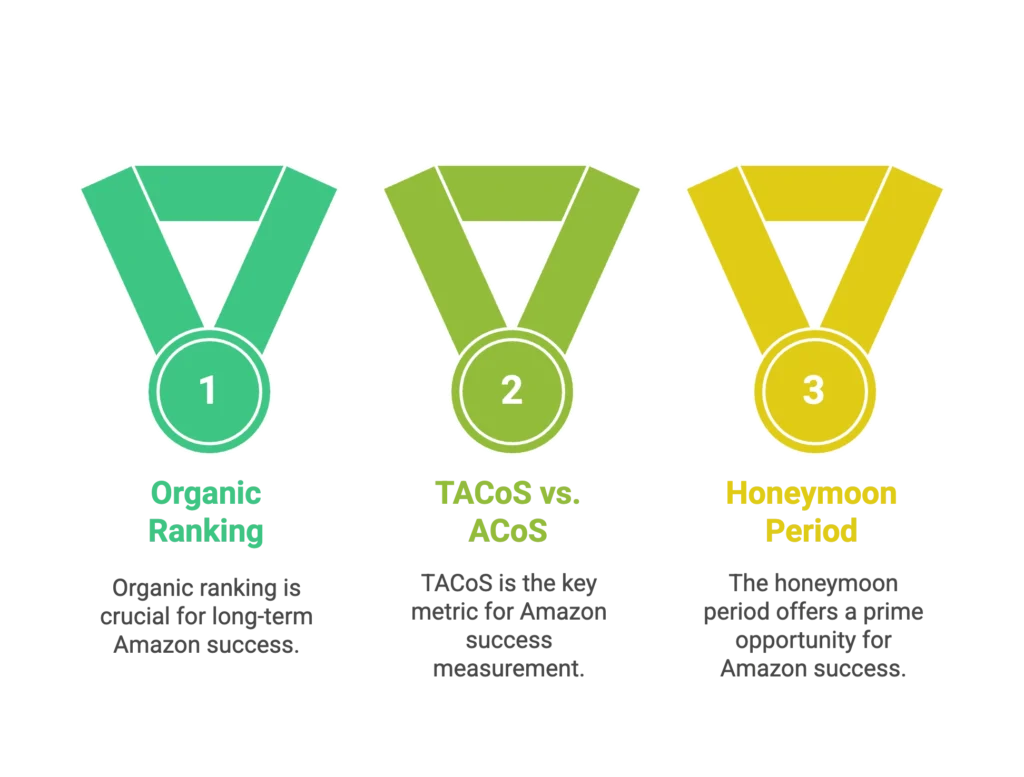
The Amazon Ecosystem: Why Organic Ranking Is Everything
Understanding Amazon’s Ranking Algorithm
Amazon’s A9 algorithm prioritizes listings that convert well and satisfy customers. Unlike Google, where authority and backlinks matter, Amazon cares about sales velocity, conversion rates, and customer satisfaction signals.
Based on my experience building multiple brands, when you establish strong organic rankings, you can reduce or eliminate ad spend while maintaining sales growth. This creates a sustainable competitive moat that competitors can’t easily replicate through increased ad budgets.
The Organic Ranking Advantage
I’ve seen this firsthand with my own clothing brand. After building strong organic positions through strategic advertising during the launch phase, I was able to turn off ads entirely while maintaining growth. Even with ads turned off, organic rankings stayed strong—and even improved—allowing continued profitable sales.
The key insight: Amazon rewards listings with strong conversion fundamentals, not just advertising spend. Once you understand this principle, you can build sustainable competitive advantages.
TACoS vs. ACoS: The Metric That Matters
Most sellers obsess over Advertising Cost of Sales (ACoS) but ignore Total Advertising Cost of Sales (TACoS). ACoS only shows your ad spend relative to ad-generated sales. TACoS shows your ad spend as a percentage of total sales, including organic revenue.
TACoS reveals whether ads are building long-term ranking or just generating expensive traffic. In my client accounts, we target maintaining TACoS around 7% while scaling total sales, indicating that advertising investment is driving organic growth rather than creating ad dependency.
The Honeymoon Period Opportunity
Amazon gives new listings preferential treatment during their initial launch phase. Wholesalers who understand how to optimize this window can establish dominant positions before competitors react. This advantage, combined with your authentic products and brand relationships, creates opportunities that pure private label sellers can’t access.
The B2B-to-B2C Operating Framework

Phase 1: Channel Control & Brand Registry Foundation
Before launching any listings, secure Brand Registry to control your catalog and prevent unauthorized resellers from hijacking your listings or pricing strategy. This isn’t optional—it’s foundational to protecting your brand value on Amazon.
Establish Minimum Advertised Price (MAP) policies and enforcement mechanisms to maintain price integrity across all channels, including Amazon. Create systems to monitor and control who can sell your products on Amazon, protecting both brand value and margin integrity.
Most wholesalers don’t realize that Amazon Business can serve both their traditional B2B customers and new retail segments simultaneously. The key is proper catalog setup from the beginning.
Phase 2: Catalog Architecture Strategy
Design your catalog hierarchy to consolidate demand and accelerate review accumulation. Don’t create separate parent listings for every variation—strategic grouping amplifies ranking signals.
Use Amazon’s flat file system to properly structure product data, ensuring accurate categorization and searchability within Amazon’s algorithm. Choose variation themes—size, color, style—that align with how customers search and shop, maximizing the visibility of your entire product family.
This catalog engineering approach differs fundamentally from traditional wholesale catalogs. Instead of comprehensive product listings, you’re creating conversion-optimized product families that work within Amazon’s algorithmic framework.
Phase 3: Business-to-Business Features Integration
Implement Amazon Business pricing with business-only pricing tiers and quantity-based discounts. This allows you to serve B2B customers who migrate to Amazon for convenience while maintaining separate retail pricing for consumers.
Enable bulk ordering options that serve your traditional wholesale customers while capturing new retail segments. The goal is expanding your addressable market, not choosing between B2B and B2C customers.
The Wholesale Launch Sequence for Sustainable Growth

Pre-Launch: Foundation Setting
Properly configure all New Item Setup (NIS) data fields that impact discoverability and categorization. Amazon uses this backend data for internal ranking decisions that affect search visibility. Most sellers rush through this step, but it’s crucial for algorithmic performance.
Create mobile-optimized listings with compelling titles, bullet points, and A+ Content that convert browsers into buyers. Remember, most Amazon shoppers browse on mobile devices, so desktop-optimized content fails to convert.
Ensure adequate inventory across Amazon’s fulfillment network to guarantee fast shipping promises. This directly impacts conversion rates and organic ranking—something I learned through managing inventory distribution challenges with my own brands.
Launch Phase: The Honeymoon Period
Leverage Amazon’s invitation-only Vine program to generate early social proof and conversion signals. This provides the initial review velocity that signals quality to both the algorithm and potential customers.
Launch advertising campaigns focused on building organic ranking rather than just generating immediate sales. Focus on TACoS optimization over short-term ACoS targets. The brands that succeed long-term on Amazon follow a systematic launch sequence—it’s not about getting lucky with one product, but understanding the process and repeating it across your catalog.
Monitor and optimize conversion rate factors: product images, pricing, fulfillment speed, and content clarity. Small improvements in conversion rate create compounding effects on organic ranking.
Post-Launch: Organic Growth Acceleration
Maintain proper stock levels to prevent ranking decay from stockouts. Amazon penalizes listings that can’t fulfill orders consistently. I’ve seen strong listings lose ranking not because of competition or algorithm changes, but because stock distribution issues caused slow shipping promises in key markets.
Track organic ranking improvements and gradually reduce ad dependency as organic visibility grows. This transition requires patience and systematic monitoring, but creates the sustainable competitive advantages that justify the initial investment.
Replicate successful listing strategies across your broader product catalog, focusing on building a portfolio of high-performing parent listings rather than trying to optimize hundreds of individual SKUs.
Inventory & Operations: The Hidden Ranking Factors

The Inventory-Ranking Connection
Amazon’s algorithm considers fulfillment speed when determining search rankings. If your inventory isn’t distributed properly across warehouses, customers in certain regions see longer delivery times, hurting your conversion rate and organic ranking. Understanding this is a core part of a strong B2B to B2C Amazon strategy.
I’ve experienced this directly with my own products. Some sizes weren’t completely out of stock, but Amazon didn’t have enough inventory to place them in every warehouse. The result was customers in some regions seeing long shipping times, which slowed sales and affected organic ranking—a lesson every B2B to B2C Amazon strategy must account for.
Stock Level Management
Maintain 90+ days of inventory at all times, factoring in Amazon’s receiving delays and seasonal demand fluctuations. In my client management practice, I emphasize this inventory planning because stockouts don’t just lose sales—they permanently damage organic ranking. This principle is central to any effective B2B to B2C Amazon strategy.
The moment stock levels improve and Amazon can promise fast delivery again, organic ranks and sales typically recover. Prevention is better than recovery, especially during competitive seasons—a key insight in every B2B to B2C Amazon strategy.
Geographic Distribution Strategy
Understand how Amazon’s fulfillment network affects your customer experience and take steps to optimize inventory placement for maximum reach. Amazon rewards listings that maintain strong conversion rates and fast shipping—inventory management is ranking management, a core tenet of B2B to B2C Amazon strategy.
Advanced Strategies: Beyond Basic Optimization
Catalog Engineering for Long-term Growth
Design your Amazon catalog to support cross-selling and upselling opportunities while maintaining clear categorization for Amazon’s algorithm. Structure listings and launch sequences to accelerate review accumulation, which is crucial in long-term organic ranking stability and B2B to B2C Amazon strategy execution.
The most successful wholesalers on Amazon don’t try to be everything to everyone. They dominate specific niches where their authentic products and brand relationships create unassailable advantages—another pillar of B2B to B2C Amazon strategy.
Competitive Intelligence & Market Positioning
Understand the competitive landscape for your target keywords and identify opportunities where wholesale advantages—authentic products, brand relationships, domestic fulfillment—create differentiators. Leveraging these advantages effectively is a hallmark of B2B to B2C Amazon strategy.
Use your wholesale cost advantages strategically rather than competing purely on price, which erodes profitability and brand positioning. Your goal is leveraging existing strengths, not racing to the bottom on margins—exactly how a smart B2B to B2C Amazon strategy works.
Frequently Asked Questions
How long does it take for a wholesale business to see results on Amazon?
Based on proper launch execution, expect to see initial traction within 60-90 days, with strong organic ranking establishment taking 6-12 months. Wholesalers with proper preparation often see faster results than private label sellers because of their authentic product relationships and brand equity—a key factor in any B2B to B2C Amazon strategy.
Can traditional wholesalers compete with Chinese sellers on Amazon?
Absolutely. Wholesalers have significant advantages including authentic products, established brand relationships, domestic fulfillment speed, and customer service capabilities that overseas sellers often can’t match. Leveraging these advantages properly is central to B2B to B2C Amazon strategy success.
What’s the biggest mistake wholesalers make when starting on Amazon?
Treating Amazon like a traditional wholesale channel instead of understanding it as a ranking-based ecosystem where organic visibility determines long-term success. Most wholesalers upload products and wait for orders instead of actively optimizing for Amazon’s algorithm and customer behavior—something a proper B2B to B2C Amazon strategy addresses.
How much should wholesalers budget for Amazon advertising?
Focus on TACoS (Total Advertising Cost of Sales) rather than absolute budgets. Start with 15-20% TACoS and work toward reducing this as organic ranking improves. The goal isn’t minimizing ad spend immediately but building organic ranking, a key step in any effective B2B to B2C Amazon strategy.
Do wholesalers need different strategies than private label sellers?
Yes. Wholesalers have catalog depth, brand relationships, and supply chain advantages that require different optimization strategies focused on catalog architecture and inventory management rather than product development—core components of B2B to B2C Amazon strategy.
Transform Your Wholesale Business Into an Amazon Powerhouse
The transition from B2B wholesale to B2C Amazon success isn’t about changing your business model—it’s about understanding Amazon’s ecosystem and applying the right B2B to B2C Amazon strategy to leverage your existing advantages.
Most wholesalers who fail on Amazon don’t fail because of their products or pricing. They fail because they apply traditional wholesale logic to a platform that rewards algorithmic optimization and customer-centric thinking. Implementing the right B2B to B2C Amazon strategy ensures your wholesale experience becomes a competitive edge.
The framework outlined here works, but implementation requires understanding the nuances of Amazon’s ever-evolving ecosystem. Whether you’re ready to dive in yourself or need guidance from someone who’s lived through these strategies building multiple brands over 12 years, the key is starting with proper foundation work rather than jumping straight into advertising—a cornerstone of B2B to B2C Amazon strategy.
Ready to transform your wholesale business into an Amazon powerhouse? The strategies that built sustainable organic growth for manufacturers and wholesalers across dozens of categories can work for your business too—but only with proper execution and ecosystem understanding through a well-designed B2B to B2C Amazon strategy.

