 Skip to content
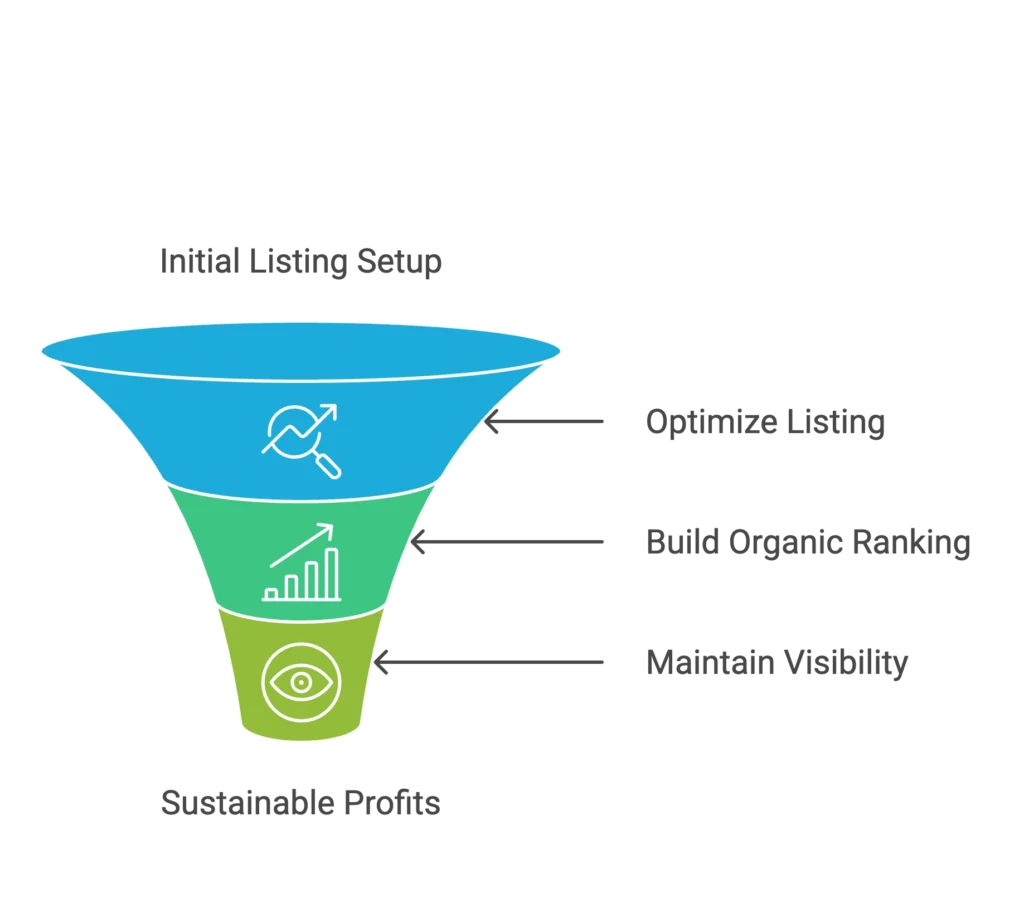
Most Amazon sellers are trapped in an expensive hamster wheel, watching their margins shrink while their ad spend grows. But what if I told you that my main listing does $400,000 per month with zero ad spend? This level of Amazon margin improvement isn’t a fluke—it’s the result of shifting the focus from paid acquisition to a sustainable, organic-first growth strategy.
After 12+ years of actual Amazon selling experience—not just consulting—I’ve learned something that most “gurus” won’t tell you: Amazon isn’t a pay-to-play advertising platform. It’s a ranking ecosystem where organic visibility drives sustainable profits.
I’m currently building my own brands while managing client accounts, and my recent results speak for themselves: 25% profit margins on listings that maintain strong organic rankings without constant ad dependency. This isn’t theory—it’s precision work based on building Amazon brands without ads by understanding how Amazon’s algorithm actually rewards long-term performance.
The Real Amazon Margin Problem
The conventional wisdom of “spend more on ads to make more money” is killing seller margins and creating unsustainable businesses. Most sellers follow the same failing playbook: cut product costs, optimize PPC campaigns, and raise prices, but they rarely address the structural issues required for long-term Amazon margin improvement. While these tactics might provide temporary relief, true Amazon margin improvement only happens when you shift your focus from top-line revenue to a ranking ecosystem that reduces your total dependency on paid traffic.
What this approach misses is fundamental: Amazon rewards listings that maintain strong conversion rates and fast shipping promises. Ads are just one piece of the puzzle, not the entire solution.
The Hidden Margin Killers
From managing accounts doing $700,000 per month with 7% TACOS, I’ve identified the real profit drains that most sellers never address:
Inventory Distribution Issues: Low stock levels trigger Amazon’s algorithm penalties. When you’re running low on certain variations, Amazon can’t distribute your inventory across all fulfillment centers. Customers in some regions see 4-5 day delivery times instead of 2-day Prime, which kills conversion rates and hurts organic rank.
Fee Structure Blind Spots: New fee types quietly erode unit margins—low-inventory-level fees, inbound placement service fees, and returns processing fees. Most sellers react to these instead of planning for them.
Catalog Architecture Problems: Split parent listings, wrong variation setups, and backend keyword degradation over time. These structural issues compound, making even successful products harder to scale.
The Margin OS Framework: Strategic Fee Optimization
After building listings that do over $1 million per year, I’ve developed a systematic approach to Amazon margin improvement that focuses on organic ranking strength first, fee optimization second.
Strategy 1: Master Your Unit Economics Foundation
Start with a comprehensive cost breakdown that goes beyond basic COGS calculations:
- Landed COGS and referral fees (category-dependent)
- FBA fulfillment fees and seasonal storage rates
- Inbound placement service fees
- Returns Processing Fee (RPF) risk assessment
- Brand Referral Bonus credits where applicable
The key is tracking fee changes monthly. Amazon updates fee structures regularly, and staying ahead of these changes protects your margins before they’re impacted.
Strategy 2: Fee-Smart Inventory Targets
Amazon now charges low-inventory-level fees when your days of supply (DOS) falls below certain thresholds. This isn’t just about having stock—it’s about maintaining the right stock levels to avoid penalties.
Set DOS targets above Amazon’s penalty thresholds by monitoring your 30/90-day historical days of supply views. Coordinate aged-inventory checkpoints around the 15th monthly snapshot when Amazon takes its aged inventory snapshot.
From my own experience maintaining 90-day stock levels on million-dollar listings, the moment stock distribution becomes uneven, conversion rates drop and organic rank suffers. This is a critical factor in Amazon margin improvement—it has nothing to do with shutting off ads; it’s about Amazon’s ability to promise fast delivery across all regions.
Strategy 3: Strategic Inbound Placement Management
Amazon’s inbound placement service fee varies based on your shipping configuration. Understanding this decision tree saves significant margin:
- Minimal shipment splits: Highest fees but simplest logistics
- Partial consolidation: Moderate fees with some complexity
- Amazon-optimized placement: Lowest fees but requires strategic planning
Evaluate shipping costs versus placement fees for each shipment. Leverage New Selection placement fee waivers when launching new products, and track placement fee reports to optimize future shipments.
Strategy 4: Returns-Rate Reduction Protocol
Returns Processing Fees hit categories with high return rates, but the real damage is to organic ranking. Returns signal poor product-market fit to Amazon’s algorithm.
Analyze your category’s average return rate and optimize product detail pages to set accurate expectations for Amazon margin improvement. Improve packaging to prevent damage-related returns, and use A+ content to address common return reasons before they happen; this proactive approach to reducing refunds is a critical lever for Amazon margin improvement in high-competition categories.
Strategy 5: Program Leverage Points
SIPP Certification: Ships in Product Packaging certification reduces fulfillment fees while improving customer experience. Identify eligible ASINs, complete certification testing, and track fee reduction impact on contribution margins.
Low-Price FBA Optimization: For products under $10, Low-Price FBA rates offer reduced fees. This isn’t about small items—it’s about understanding when fee structures change and optimizing accordingly.
Brand Referral Bonus Strategy: Drive off-Amazon traffic through Amazon Attribution to earn referral fee credits. Track these credits to understand their true impact on overall margins.
The Organic-First Philosophy: Why This Framework Works
After 12 years of selling on Amazon, I’ve learned that the algorithm rewards consistency over short-term manipulation. When you focus on maintaining healthy inventory levels, delivering fast shipping promises, reducing return rates, and optimizing for mobile conversion, Amazon responds by improving your organic visibility.
My main listing now does $400,000 per month with zero ad spend because we built organic strength first. The margins speak for themselves—25% profit margins that continue to grow as organic rankings improve.
When you’re not dependent on ads for sales, every revenue increase drops straight to your bottom line. That’s the difference between an 8% margin business and a 25% margin business.
Implementation Roadmap: 90-Day Amazon Margin Improvement Plan
Days 1-30: Foundation and Assessment
Week 1: Complete a comprehensive cost audit. Map all current fees and costs, identify hidden margin drains, and establish baseline margin metrics.
Weeks 2-3: Conduct inventory analysis. Review current DOS across all SKUs, identify low-inventory risk products, and plan inventory replenishment schedules that maintain consistent stock distribution.
Week 4: Set up fee optimization framework. Audit current inbound placement strategies, identify SIPP certification opportunities, and review return rates by product category.
Days 31-60: Strategy Implementation
Focus on fee structure optimization by implementing strategic inbound placement decisions and beginning SIPP certification for eligible products. Set up automated inventory monitoring to catch DOS drops before they impact rankings.
Simultaneously, strengthen organic ranking factors by optimizing listings for mobile-first experience, improving product detail pages to reduce returns, and updating backend keyword optimization.
Days 61-90: Scale and Optimize
Track margin improvements across all implemented strategies and identify highest-impact optimization opportunities. Scale successful strategies across your broader catalog while implementing advanced optimizations like Brand Referral Bonus strategies and AWD auto-replenishment where applicable.
Common Implementation Mistakes to Avoid
Mistake 1: Focusing on One Fee Type at a Time Many sellers optimize inbound placement fees while ignoring inventory level fees. These strategies work together—implement holistically for maximum impact.
Mistake 2: Ignoring Mobile Optimization Most Amazon shoppers are on mobile. If your listings don’t convert on mobile, your organic rank suffers regardless of fee optimization efforts.
Mistake 3: Over-Relying on Historical Data Amazon’s fee structures and algorithm priorities change regularly. What worked six months ago might not work today. Stay current with Amazon’s seller central updates and fee structure changes.
The Bottom Line on Amazon Margin Improvement
Margin improvement on Amazon isn’t about cutting costs or spending more on ads. It’s about understanding Amazon as a ranking ecosystem and optimizing every element that influences your organic visibility.
From my experience managing full accounts at $3,500 per month focusing on five parent listings, I’ve seen what works: organic ranking drives sustainable margins, fee optimization requires a systematic approach, and inventory management directly impacts profitability.
The key insight most sellers miss is that Amazon rewards listings that maintain strong performance metrics over time. When you build that foundation first, margin optimization becomes about fine-tuning a profitable system rather than fixing a broken one.
Start with a complete cost audit using this framework. Identify your biggest margin drain and tackle it systematically. Remember—Amazon rewards consistency and sustainable performance over short-term tactics.
This organic-first approach to margin improvement has allowed me to build listings doing over $1 million annually while maintaining the margins that make Amazon businesses truly profitable. It’s not about having hundreds of mediocre listings—it’s about having a few dominant ones that generate sustainable cash flow.
Focus on organic ranking strength, optimize fees strategically, and watch your margins improve as your dependence on paid advertising decreases. That’s how you build a real Amazon business, not just another ad-spend hamster wheel.

