 Skip to content
Look, I’m going to be blunt with you.
Every day, I watch sellers flush thousands of dollars down the drain because they treat their Amazon listing like it’s 2015. They launch products with generic content and set-and-forget pricing, then wonder why they’re burning cash on ads while their competitors dominate organically.
Here’s what’s really happening: While you’re following outdated YouTube tutorials, smart sellers are exploiting Amazon’s algorithm in ways most people will never understand. They’re building million-dollar listings using launch strategies that would make your current approach look like amateur hour.
I’ve been doing this for 12+ years. I’ve built brands, sold them, and currently have a brand hitting $400,000/month with zero ad spend. But here’s the kicker—most of what I’m about to share regarding a high-performance Amazon Listing, I’ve never talked about publicly. If you want to stop “renting” your traffic and start owning it, your Amazon Listing needs to be treated as a conversion machine rather than just a digital brochure.
This isn’t another generic “launch checklist.” This is the behind-the-scenes playbook that separates the winners from the wannabes. And if you’re not doing this, you’re leaving massive opportunity on the table. To dominate in 2026, your Amazon Listing must be built as a high-performance data asset, and failing to optimize your Amazon Listing for the new AI-driven search landscape means you’re practically invisible to high-intent buyers.
Why 95% of Amazon Launches Are Dead on Arrival
Last week, I had a client call where the founder was confused why their “perfect” product launch generated $3,000 in month one while burning $8,000 in ads.
The brutal truth? They did everything the “gurus” told them to do. Professional photos, “optimized” listing, competitive pricing. All the basics.
What they missed: Amazon isn’t rewarding basic anymore. The algorithm has evolved, and most sellers are still playing by 2019 rules.
Here’s what I see killing launches every single day:
The Honeymoon Period Myth: Everyone talks about the 90-day honeymoon period like it’s automatic. It’s not. Amazon gives you preferential treatment IF you prove you deserve it. Most sellers waste this window with weak signals and never recover.
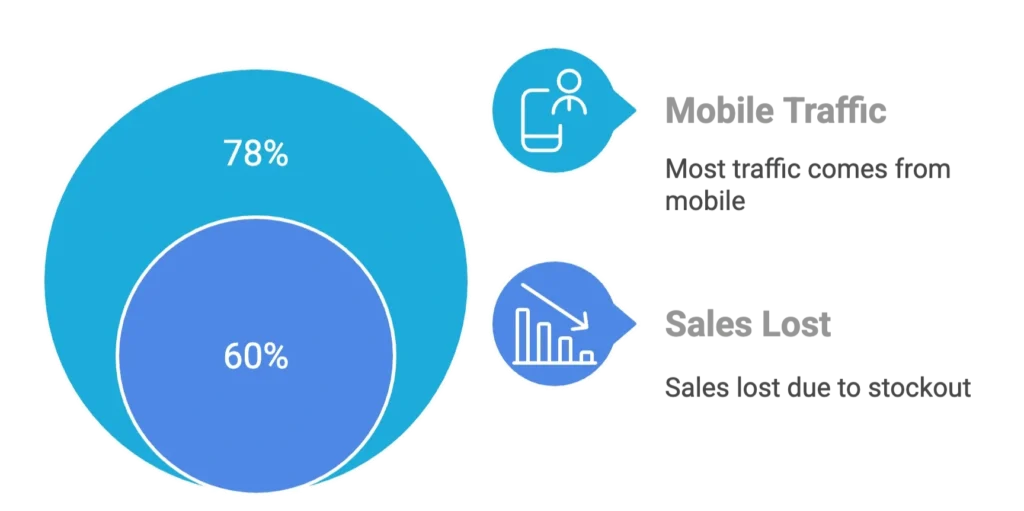
Mobile Blindness: 78% of traffic is mobile, but sellers optimize for desktop. Your listing has 3 seconds to convert on a 6-inch screen. If your title doesn’t hook in the first 80 characters, you’ve already lost.
Catalog Architecture Ignorance: This is the big one. Sellers create listings without understanding Amazon’s parent-child hierarchy. One stockout on your best-performing variation crashes your entire listing’s organic ranking. I’ve seen $2M brands lose 60% of sales because they didn’t understand this.
The Real Launch Strategy That Actually Works

Amazon Listing forget everything you’ve heard about “listing optimization.” Here’s what actually moves the needle:
Phase 1: The Foundation Most Sellers Skip (Days -30 to 0)
The Inventory Geography Secret
This is something I learned from managing eight-figure accounts: Amazon’s algorithm doesn’t just care if you have inventory—it cares WHERE your inventory is located. This “geographic relevancy” is a critical pillar of your Amazon Listing performance, as it determines which shoppers even see your product in their “Get it Tomorrow” search results. If your stock isn’t distributed correctly, your Amazon Listing is effectively invisible to half the country.
If you’re showing 4-day shipping in California but 2-day in New York, your conversion rates tank. And when conversion rates drop, organic rankings collapse.
I use a custom monitoring system to track shipping speeds by ZIP code. The moment I see delays in major markets, I know rankings will drop before it shows in reports.
Backend Keyword Architecture
Everyone talks about backend keywords like they’re an afterthought. Wrong. This is where you index for the long-tail terms that add up to serious traffic.
I recently helped a client restructure their backend keywords. Same product, same images, same price. Result? 40% increase in impressions within 30 days just from proper backend optimization.
The Pricing Psychology Play
Here’s where most people get it wrong: they launch at target price because they don’t want to “leave money on the table.”
Reality check: You’re not leaving money on the table—you’re investing in algorithmic trust. Amazon needs to see strong conversion signals early. Launch at 30-50% below target for the first 30 days, then gradually increase.
Phase 2: The Critical First 30 Days (Where Winners Are Made)
Week 1: The Momentum Explosion
This is where I see sellers panic. They launch and sales are slow. So they immediately start throwing money at ads.
Here’s what I do instead:
I activate Amazon Vine immediately. Not for the reviews—for the early conversion signals. When Amazon sees people requesting your product through Vine, it signals demand before you even have sales.
I start with auto campaigns at aggressive bids. Not to make money—to feed the algorithm data about what your product actually is versus what you think it is.
Week 2-4: The Scaling Sequence
Most sellers scale too fast or too slow. They either burn through budget without building rank, or they’re too conservative and miss the momentum window.
The sweet spot: 40-60% of sales on ads during first 30 days. This sounds high, but it’s investment, not expense. Every dollar spent is buying future organic rankings.
Phase 3: The Optimization Phase (Days 31-90)
The Transition Game
By day 30, you should see organic rankings climbing quick. If you don’t, something’s fundamentally broken with your foundation.
Month two is about transitioning from volume-focused to profitability-focused. The key metric: organic sales as a percentage of total sales should be increasing weekly. This shift is critical for the long-term health of your Amazon Listing, as it proves you can maintain momentum without an infinite ad budget. By stabilizing your Amazon Listing through organic growth, you protect your margins and build a sustainable brand asset.
The Price Increase Strategy
Here’s where most sellers fumble at the goal line. They see rankings improve and immediately jump to target price.
Wrong move. Increase prices 5-10% weekly, but ONLY if organic rankings continue climbing. The moment rankings stall, pause price increases until momentum returns.
The Behind-the-Scenes Secrets That Change Everything
The Child ASIN Hierarchy Revelation
Last month, I had a call with a clothing brand doing $2M annually. Their main size went out of stock—the size ranking #1 for their primary keyword.
Result? Total sales dropped 60% in two weeks, even though other sizes were fully stocked.
Why? Amazon ranks each child ASIN independently. Lose your MVP variation to stockout, and your entire listing can crash.
The solution: I monitor inventory levels for each variation and ensure the top-performing sizes never drop below 45 days supply. This one change stabilized their rankings permanently.
The Mobile Psychology Hack
Here’s something I discovered analyzing mobile conversion data: successful listings follow a specific psychological pattern on mobile.
- Title: Value must be obvious in first 80 characters
- Price: Must feel like a “steal” compared to alternatives
- Reviews: Minimum 4.3 stars average
- Main Image: Instant product recognition in 3 seconds
Real example: Changed a client’s main image to show the product in use versus a plain product shot. Mobile conversion rate increased 34% overnight.
The Inventory Distribution Secret
Most sellers think having inventory means being in stock. That’s kindergarten-level thinking.
Amazon’s algorithm considers geographic distribution across fulfillment centers. Poor distribution = slow shipping in key markets = low conversion rates = ranking death.
I’ve seen sellers with 500 units show “currently unavailable” in major cities because of poor distribution. Amazon has the inventory—it’s just in the wrong places.
The Case Study That Proves Everything
Let me share real numbers from my current brand launch—the one hitting $400K/month:
Month 1: $66,000 sales, -$8,400 profit (heavy investment phase) Month 2: $22,000 sales, $1,100 profit (recovery from stockout) Month 3: $89,000 sales, $14,000 profit (momentum building) Months 4-6: Stockout disaster—sales crashed to $15K/month Months 7-9: Recovery phase through aggressive repricing Current: $400,000/month, $0 ad spend, 87% organic sales
Key insight: The stockout in months 4-6 nearly killed everything. This wasn’t a complete stockout—we had inventory, but distribution was poor. Amazon couldn’t promise fast shipping in key markets, so rankings collapsed.
Recovery strategy: Air-shipped inventory to improve distribution, then repriced aggressively below competition until rankings recovered. Took 90 days and $35K in extra costs, but we came back stronger.
The Mistakes That Kill Rankings (And How to Avoid Them)

The Generic Listing Death Trap
If your listing could describe 50 other products, it won’t rank for anything specific. Amazon’s algorithm rewards relevance, not generic keywords.
Example: Instead of “Premium Bluetooth Headphones,” try “Noise-Canceling Wireless Headphones for Airplane Travel.” The second version targets specific buyer intent.
The Price Point Poison
Starting at target price with zero reviews is ranking suicide. Amazon needs conversion signals, and overpricing prevents them.
The fix: Launch 40-50% below target. Yes, it hurts short-term profit. But the long-term organic ranking boost is worth millions more than those early sales.
The Mobile Disaster
Desktop optimization is worthless if mobile users can’t understand your value in 3 seconds.
Reality check: I analyzed 100 top-ranking listings. The winners all follow mobile-first design principles, even if they look “off” on desktop.
The Questions That Reveal Everything
How long does the honeymoon period actually last?
60-90 days typically, but the strongest boost is in the first 30 days. Miss this window, and you’ll spend 3-5x more trying to recover lost ground.
Can you recover from a failed launch?
Yes, but it’s expensive. I’ve helped clients recover, but it usually requires complete listing reconstruction and heavy ad investment. Much cheaper to launch correctly first time.
How much should you spend on ads during launch?
40-60% of sales for first 30 days, dropping to 15-25% by day 90. Early ad spend is investment in organic ranking, not just immediate sales.
What’s the biggest launch mistake?
Thinking Amazon is like other e-commerce platforms. It’s not. Amazon is a ranking algorithm disguised as a marketplace. Every decision must consider algorithmic impact.
How do you know if your launch is working?
Weekly organic rank improvement for target keywords, increasing percentage of organic sales, decreasing TACoS, and growing review velocity.
What This Really Means for Your Business
Here’s what most sellers don’t understand: Amazon success isn’t about having great products anymore. It’s about understanding the algorithm better than your competitors.
Every element—pricing, inventory, ads, copy, images—must work together with surgical precision. Most sellers treat these as separate tasks. Winners understand they’re interconnected systems.
The bottom line: While your competitors are following generic advice from YouTube, you now know the real strategies that separate million-dollar sellers from wannabes.
The question is: Are you going to keep doing what everyone else does, or are you ready to play the real game?
Stop leaving money on the table. Stop following outdated strategies. Stop believing that good products automatically win.
Amazon is a ranking game. Master the algorithm, and you build equity that compounds for years.
Your Launch Execution Checklist
30 Days Before Launch:
- [ ] Brand registry active with Vine enrollment
- [ ] Backend keywords optimized for long-tail indexing
- [ ] Inventory ordered with 90-day supply minimum
- [ ] Geographic distribution strategy planned
- [ ] Competitor analysis and pricing strategy documented
Launch Week:
- [ ] Pricing 40-50% below target
- [ ] Amazon Vine activated for early signals
- [ ] Auto campaigns launched with aggressive bids
- [ ] Inventory distributed across multiple fulfillment centers
- [ ] Hourly monitoring system activated
30-Day Review:
- [ ] Organic rank improvements documented for all target keywords
- [ ] Ad performance analyzed and optimized
- [ ] Price increase schedule implemented (5-10% weekly)
- [ ] Review velocity targets achieved
- [ ] Competitor response monitored and strategy adjusted
The real secret? Most sellers will read this and do nothing. The ones who implement this framework immediately will dominate their categories while others keep struggling with outdated strategies.
Your move.


