 Skip to content
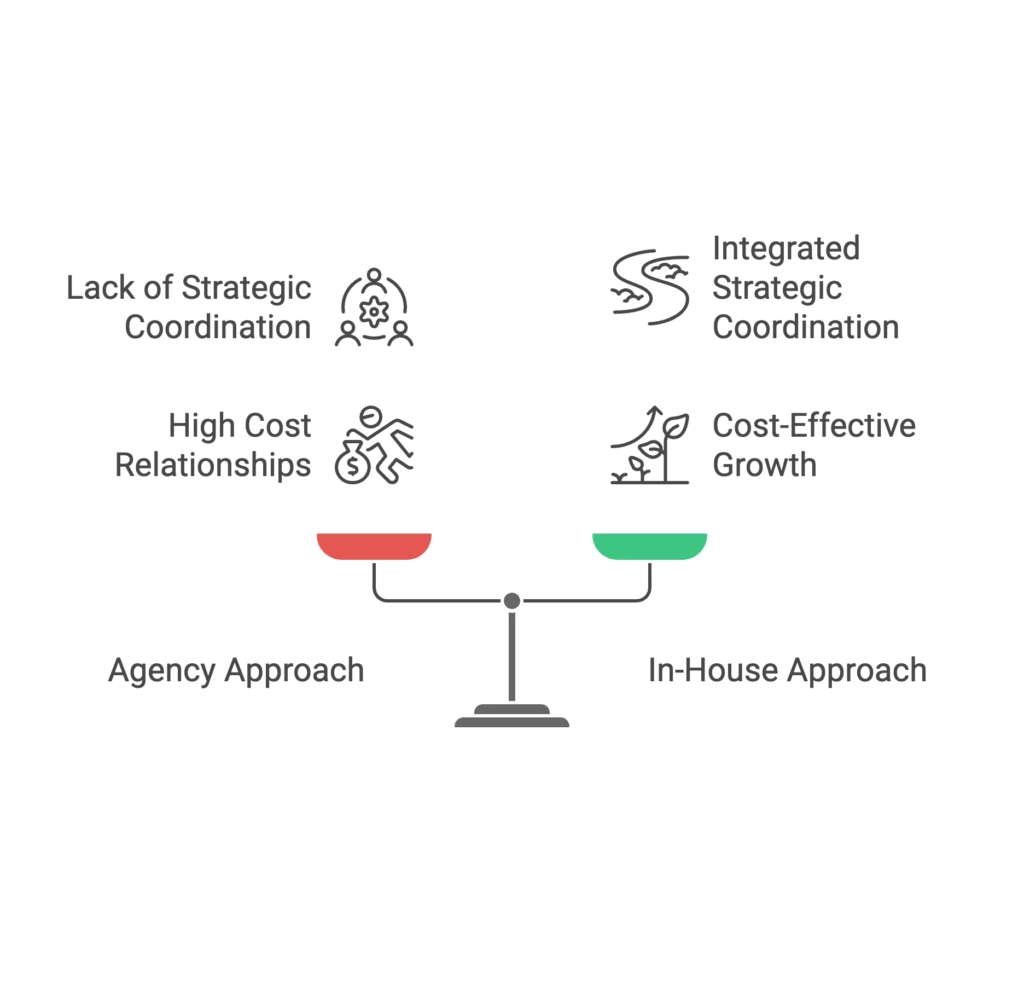
Most Amazon sellers think they need an agency to scale. I disagree. After 12 years of selling on Amazon and building my own $400K/month listing without ads, I’ve seen too many businesses get trapped in expensive relationships that prioritize the agency’s revenue over your growth. If you are tired of the “pay-to-play” cycle, it is time to look at Amazon agency alternatives that focus on building an internal, sustainable system rather than just managing a budget.
Here’s what most won’t tell you: Amazon isn’t a collection of tasks you can outsource. It’s an ecosystem where every element—listings, ads, inventory, pricing, reviews—works together. When agencies treat it like separate services, you lose the strategic coordination that actually moves the needle and leads to true Amazon Marketplace Domination.
I’m not anti-agency. I run a boutique Amazon management company myself. But I’ve watched countless manufacturers, wholesalers, and established sellers waste money on the wrong approach. Whether you choose a traditional firm, explore Amazon agency alternatives like building in-house, or create a hybrid model, you need to understand what actually works and why.
This isn’t theory from a whiteboard. I currently manage my own clothing brand that does $400K monthly in sales, and I’ve spent 12 years figuring out what Amazon rewards. In this guide, I’ll show you the real Amazon agency alternatives that actually scale—helping you break through a stagnant Amazon Revenue Plateau and choose the path that builds sustainable, profitable growth.
The Real Cost of Amazon Agencies (What Most Don’t Tell You)
Beyond the Monthly Retainer
When evaluating Amazon agencies, most sellers only look at the monthly fee. That’s a mistake. The real cost includes several hidden elements that can significantly impact your business.
Percentage-of-ad-spend models create perverse incentives. When an agency takes 15–20% of your advertising budget, they’re rewarded for higher spending, not better results. This is exactly why so many sellers are searching for Amazon agency alternatives; I’ve seen accounts where agencies pushed ad budgets higher while organic rankings stagnated because there was no financial incentive to build long-term growth.
Then there’s the knowledge gap. When you work with an agency, all the learning stays with them. If you ever need to switch or bring management in-house, you’re starting from scratch. You don’t understand why certain decisions were made or what actually drives your results.
Most agencies also operate with a one-size-fits-all approach. They’ll apply the same PPC strategies to a clothing brand and a supplement company, ignoring the unique dynamics of each category. This works for their operational efficiency, but it’s the primary reason sophisticated sellers look for Amazon agency alternatives that prioritize category-specific strategy over standardized workflows.
The Vendor Lock-in Problem
Many agencies use proprietary dashboards and tools that make it difficult to leave. Your historical data, keyword research, and performance insights become inaccessible if you switch providers. This isn’t accidental—it’s designed to increase switching costs and keep you dependent.
I’ve worked with clients who paid agencies for years but couldn’t answer basic questions about their own Amazon business. They didn’t know which keywords drove organic sales, how inventory levels affected rankings, or why certain listings performed better than others.
When Agencies Make Sense (The Honest Assessment)
Legitimate Use Cases for Agency Partnership
Despite my criticisms, agencies can provide real value in specific situations. Complex DSP management often requires specialized tools and expertise that don’t make sense to build in-house unless you’re spending significant budgets across multiple accounts.
International expansion presents another valid use case. Managing Amazon accounts across different countries involves language barriers, local regulations, and cultural nuances that specialized firms handle more efficiently than most in-house teams. However, even here, there are Amazon agency alternatives like fractional international consultants or specialized regional partners that can help you scale without the overhead of a massive, full-service firm.
Brand protection and legal compliance also benefit from agency expertise. Dealing with hijackers, counterfeit products, and intellectual property issues requires specialized knowledge and established relationships with Amazon’s policy teams.
Warning Signs of Poor Agency Fit
However, many agencies focus exclusively on PPC management while ignoring the factors that actually build sustainable growth. If an agency talks primarily about ACoS optimization without discussing organic ranking strategies, that’s a red flag.
Beware of agencies that can’t explain how their PPC strategies build organic rank. Ads should be part of a larger ecosystem strategy, not just a traffic generation tool. If they’re not tracking organic keyword positions or explaining how ad performance affects long-term visibility, you’re paying for expensive traffic rental.
Another warning sign is generic advice that doesn’t account for your business model. Manufacturers and wholesalers have different needs than private label sellers, but many agencies apply the same playbook regardless of client type.
The In-House Alternative: Building Your Amazon Operating System
The 90-Day In-House Build Framework
Building effective in-house Amazon management requires more than hiring someone to “handle Amazon.” You need to create a systematic approach that treats Amazon as the complex ecosystem it actually is.
Team Structure for Success:
Your Catalog Owner manages backend optimization and variation strategy. This person ensures your product catalog is structured for maximum discoverability and prevents the architectural mistakes that limit growth potential.
The Listing CRO Lead focuses on mobile-first optimization and conversion testing. Since most Amazon shoppers browse on mobile devices, your listings need to convert within the first few seconds of viewing. This role continuously tests images, pricing, and copy to maximize conversion rates.
Your Ads Lead runs strategic PPC that builds organic rank rather than just generating clicks. This isn’t about managing bids—it’s about understanding which keywords to prioritize and how ad performance feeds into long-term organic growth.
The Ops/Inventory specialist manages stock distribution and honeymoon strategy. Amazon rewards consistent availability and fast shipping, so this role ensures your inventory is positioned optimally across fulfillment centers and never runs critically low on high-performing variations.
Finally, your Analytics lead tracks organic rank movement and ecosystem performance. This person monitors how all the other elements work together and identifies when changes in one area affect overall performance.
Essential SOPs and Processes
Successful in-house management requires documented processes that ensure consistent execution. Your keyword maintenance should follow a regular cadence—not just initial research, but ongoing monitoring and optimization based on performance data.
Image testing needs systematic approaches for mobile-first optimization. Most sellers upload images once and never test alternatives, missing significant conversion improvements. This level of detail is exactly what the best Amazon agency alternatives prioritize; your process should include regular A/B testing of main images, lifestyle shots, and infographic elements to ensure you aren’t leaving money on the table.
Inventory management prevents the rank drops that kill momentum. When you run low on stock, especially on your best-performing variations, Amazon reduces your visibility because they can’t guarantee fast delivery. Your SOP should trigger reorders well before this happens.
Review generation requires ethical strategies that comply with Amazon’s policies. This means encouraging legitimate reviews through follow-up sequences and excellent customer service, not manipulative tactics that risk policy violations.
KPI Framework That Actually Matters
Most sellers obsess over ACoS, but that’s just one piece of the puzzle. Your KPI framework should track organic rank movement for your target keywords. If your ads aren’t improving your organic positions over time, you’re just renting traffic.
Monitor click-through rates by image variation to understand what attracts clicks in search results. This data helps optimize your main images for better organic performance.
Track TACoS (Total Advertising Cost of Sales) alongside organic sales share. This shows whether your advertising is building sustainable business or just maintaining artificial sales volume.
Out-of-stock percentage tracking prevents the inventory mistakes that tank rankings. Even brief stockouts on important variations can set back months of ranking progress.
Review velocity monitoring helps you understand how quickly you’re building social proof and identify when review generation efforts need adjustment.
Tool Stack vs Human Expertise: Finding the Balance
When Software Suffices
Certain Amazon management tasks can be effectively automated or handled by software tools. Basic keyword research works well with tools like Helium 10 or Jungle Scout, especially for initial product research and competitive analysis. These tools serve as powerful Amazon agency alternatives for sellers who prefer to build a lean, tech-driven operation rather than outsourcing basic tasks to a full-service firm.
Automated inventory alerts help prevent stockouts by triggering reorders based on velocity and lead times. These tools handle the math better than manual tracking and reduce the risk of human error.
Basic PPC bid management can be automated for mature campaigns where you’re primarily optimizing existing performance rather than building new strategies.
Review monitoring tools effectively track your reputation and alert you to issues that need immediate attention.
When You Need Human Judgment
However, the strategic decisions that actually drive growth require human expertise and judgment. This is why many top sellers are moving toward Amazon agency alternatives that focus on high-level strategy over basic task management. Catalog architecture decisions—how you structure parent-child relationships, variation strategies, and product categorization—fundamentally affect your ability to rank and scale.
Mobile-first listing psychology involves understanding customer behavior and decision-making processes that software can’t replicate. How you structure your title, bullets, and images for mobile viewing requires human insight into customer psychology.
Honeymoon period strategy during product launches requires understanding Amazon’s algorithm and making tactical decisions about pricing, inventory levels, and promotional timing. These decisions are too nuanced for automated tools.
Competitive positioning involves analyzing competitor strategies and finding opportunities that software might miss. Understanding why certain listings perform better requires human analysis of customer needs and market dynamics.
Crisis management during stockouts, policy issues, or ranking drops requires quick strategic thinking and the ability to coordinate multiple solutions simultaneously.
The Manufacturer/Wholesaler Track: Special Considerations
Why Traditional Retail Experience Can Hurt on Amazon
Many manufacturers and wholesalers struggle on Amazon because they apply traditional retail thinking to a completely different environment. Retail distribution focuses on getting products into stores, but Amazon success depends on individual listing performance and organic ranking. Bridging this gap is often where Amazon agency alternatives provide the most value, as they shift the focus from simple inventory placement to active brand building and algorithmic dominance.
Catalog consolidation becomes critical when you have hundreds of SKUs designed for wholesale distribution. Amazon rewards focused catalogs with strong individual listings over broad catalogs with mediocre performance across many products.
Variation strategies that work in retail often fail on Amazon. Grouping products as variations affects how Amazon displays and ranks your listings, requiring careful consideration of what should be grouped together versus listed separately.
Pricing strategies must account for Amazon’s unique dynamics. The honeymoon period after launch requires different pricing than long-term optimization, and Amazon’s algorithm responds to price changes differently than traditional retail customers.
The Critical First 12 Weeks
The first 12 weeks on Amazon often determine long-term success, especially for new products or brands. During this honeymoon period, Amazon tests your listings with increased visibility to gather performance data.
Inventory positioning across fulfillment centers matters more during launch than later. Amazon needs confidence that you can fulfill orders quickly nationwide before they’ll give you significant organic visibility.
Strategic pricing during the launch window involves finding the balance between conversion rate optimization and margin protection. Prices that are too high reduce conversion and hurt your algorithmic performance, while prices that are too low can be difficult to raise later. Finding this “sweet spot” is a core focus of Amazon agency alternatives that prioritize your long-term profitability over the simple, high-spend volume that traditional agencies often chase.
Review generation during the honeymoon period requires careful attention to Amazon’s policies while building the social proof that sustains long-term growth.
Real Results: What’s Actually Possible
Building Without Ad Dependency
My clothing brand demonstrates what’s possible when you understand Amazon as an ecosystem rather than just an advertising platform. After building strong organic rankings through strategic PPC during the honeymoon period, we were able to turn off ads completely for 90 days while maintaining $400K monthly sales.
This wasn’t luck—it was the result of systematic execution across every element of the Amazon ecosystem. Strong conversion rates from mobile-optimized listings, strategic inventory management that ensured fast shipping, and careful attention to review generation all contributed to organic ranking strength. This type of deep-dive optimization is exactly what the best Amazon agency alternatives focus on to build a brand that thrives without being dependent on a massive ad budget.
The key insight is that ads should build organic strength, not replace it. When your PPC strategy focuses on improving organic rankings for target keywords, you eventually reduce your dependence on paid traffic.
However, this approach requires patience and strategic thinking. Many sellers focus on immediate ACoS optimization instead of building the organic foundation that creates long-term sustainability.
The Long-Term Advantage
Reduced dependency on rising ad costs protects your business from Amazon’s increasing competition for advertising placements. As more sellers compete for the same keywords, ad costs naturally increase, but strong organic rankings provide insulation from these trends.
Institutional knowledge retention ensures that your learning and optimization efforts compound over time instead of benefiting outside agencies. When your team understands what works for your specific products and customers, they make better decisions faster.
Faster decision-making capability becomes crucial during crisis situations or market opportunities. In-house teams can pivot strategies, adjust pricing, or modify listings much faster than agencies managing dozens of accounts.
Making the Right Choice for Your Business
The decision between agency partnership and in-house management depends on your specific situation, resources, and growth goals. Agencies make sense when you need specialized expertise for complex challenges like international expansion or DSP management, or when you lack the internal resources to build effective Amazon capabilities.
In-house management works best when you have the resources to build a dedicated team and want maximum control over your Amazon strategy. This approach requires significant investment in hiring, training, and tool selection, but provides the deepest understanding of your business.
Many successful brands use a hybrid approach, maintaining strategic control in-house while partnering with specialists for specific challenges. The key is ensuring that core knowledge and decision-making authority remain with your team.
Whatever path you choose, focus on building organic ranking strength rather than just managing advertising spend. Amazon rewards businesses that provide excellent customer experiences with sustainable organic growth. This shift toward long-term asset building is why many top sellers are now opting for Amazon agency alternatives as the foundation of their strategy.
Success on Amazon isn’t about finding shortcuts or gaming the system—it’s about understanding the ecosystem and building systematic advantages that compound over time. Whether you work with an agency or build in-house capabilities, that understanding remains the key to long-term growth and profitability.

