 Skip to content
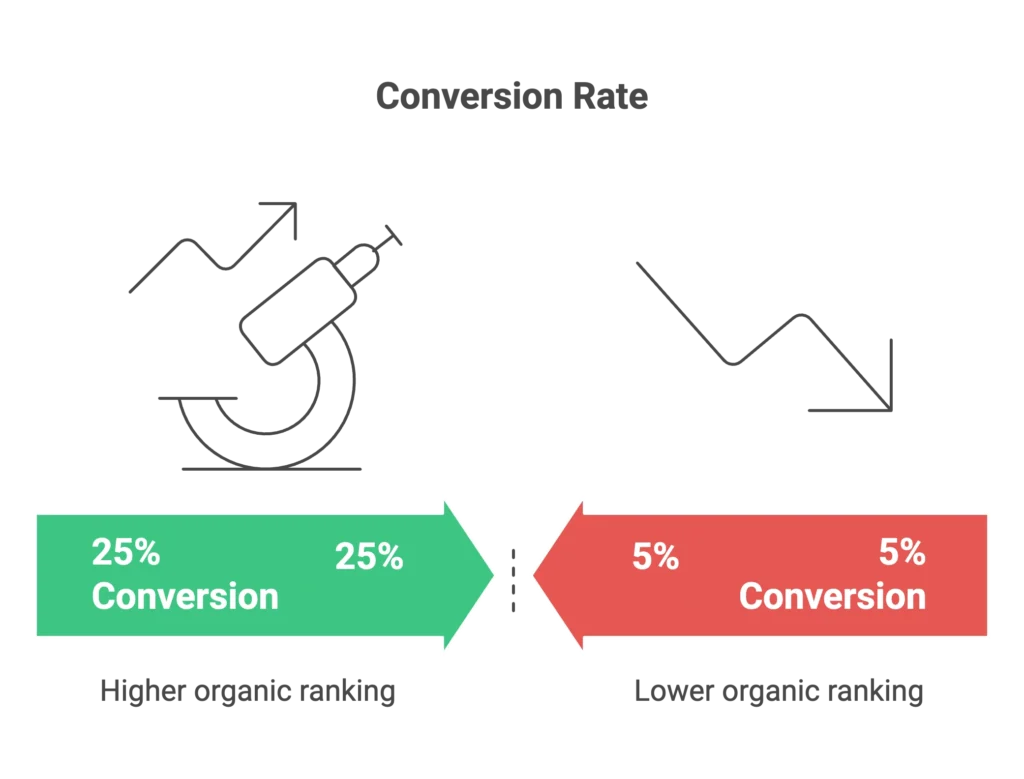
Most Amazon sellers are trapped in the conversion optimization hamster wheel. They throw money at prettier images, tweak bullet points based on YouTube advice, and wonder why their Amazon conversion optimization efforts leave their Unit Session % stuck at 5-8% while their successful competitors consistently hit 20%+.
After 12 years of building Amazon brands—including a current listing doing $400,000/month with zero ad spend—I’ve learned that Amazon conversion optimization isn’t about isolated tactics. It’s about understanding the mobile-first ecosystem where 70% of shoppers make buying decisions in the first 5 seconds of landing on your page.
The difference between a 5% and 25% conversion rate isn’t just revenue—it’s organic ranking dominance. Amazon’s algorithm rewards listings that convert traffic efficiently, creating a compound effect where better conversions lead to higher organic rankings, which drive more qualified traffic, which converts even better. This is the foundation of building an Amazon ranking engine, where your listing stops relying on expensive PPC and starts generating sustainable, high-margin sales through organic visibility.
In this guide, I’ll share the exact framework I use with my boutique Amazon management clients and on my own brands. This isn’t theory or recycled advice—these are the specific strategies I used to rank in the top 5 for competitive keywords with 387,000 monthly search volume, all while maintaining 25% margins.
Why Traditional Amazon Conversion Optimization Fails
The Mobile Reality Check
Here’s what most sellers get wrong: they optimize for desktop because that’s what they use to build listings, but their customers shop on mobile. When 70% of Amazon traffic comes from mobile devices, and most customers decide within 5 seconds of landing on your product page, desktop-first thinking kills conversions.
On mobile, customers typically see only 6-7 gallery slots by default above the fold. That means you have maybe 10 square inches of screen real estate to capture attention, build trust, and create urgency. Yet I see sellers stuffing their main image with tiny text, using white backgrounds that blend into Amazon’s interface, and burying their value proposition in the seventh bullet point.
The Ecosystem Blindness Problem
Most conversion optimization fails because sellers treat it like a creative exercise instead of understanding Amazon’s ecosystem. They’ll spend weeks perfecting images while ignoring that they don’t have the Featured Offer, or they’ll obsess over bullet points while their competitor delivers faster because of better inventory distribution.
Amazon is a chain reaction engine. Ads affect rank. Rank affects reviews. Reviews affect conversion. Conversion affects ad efficiency. If one part is broken, the whole system suffers. I’ve seen brands plateau at $500K annually because they’re optimizing individual elements instead of orchestrating the entire ecosystem.
The Measurement Confusion Crisis
Here’s where most sellers lose the plot: they don’t know what they’re measuring. They’ll tell me their “conversion rate is 12%” but they’re looking at Session Percentage, which includes Buy Box factors, not actual purchase behavior.
The metric that matters is Unit Session Percentage—found in Seller Central under Business Reports → Detail Page Sales & Traffic by Child Item. This measures true conversion: how many visitors actually buy your product. Session Percentage tells you how many people bought something when they had the chance, but if you don’t have the Buy Box consistently, that number is meaningless.
The Hidden CRO Dependencies Amazon Won’t Tell You About
Before you touch a single image or bullet point, you need to audit what I call the “conversion prerequisites.” Amazon explicitly calls out these factors in their advertising guidance, but most sellers ignore them:
Featured Offer (Buy Box) Ownership: If you don’t consistently have the Buy Box across your variations, conversion optimization is pointless. Customers can’t buy from you if Amazon isn’t featuring your offer.
Prime Badge Status: This isn’t just about eligibility—it’s about customer psychology. Prime members expect fast, free shipping. Without that badge, you’re fighting an uphill battle on conversion.
In-Stock Percentage: Here’s something that burned me early in my Amazon career: having inventory doesn’t mean Amazon can promise fast delivery everywhere. If your stock isn’t distributed across fulfillment centers, customers in certain regions see longer delivery times, which kills conversions and hurts your organic rank.
Review Profile Health: You need minimum review thresholds by category. For most products, you’re fighting with one hand tied behind your back if you have fewer than 15 reviews or below a 4.3 rating.
Price Competitiveness: Use Amazon’s own pricing recommendations as your baseline. If you’re 20% higher than comparable products without clear differentiation, no amount of image optimization will save your conversion rate.
The Mobile-First Conversion Architecture
Based on mobile shopping behavior analysis and testing across multiple brands, here’s the gallery sequence that actually converts:
Slot 1 – Hero Shot
Your main image has to make them WANT to click before they even read the title. Forget the white background product shot—show your product in use, in context, solving the problem your customer has. For my clothing brand, the main image shows the product being worn in a real lifestyle situation, not hanging on a hanger.
Slot 2 – Benefit Infographic
This is where you hammer home your primary value proposition with visual hierarchy designed for mobile screens. Think big, bold text that’s readable on a phone. Prioritize benefits based on search intent—if people are searching for “waterproof,” make waterproof the star of this image.
Slots 3-4 – Social Proof & Risk Reversal
Reviews, testimonials, guarantees—anything that builds trust and removes purchase anxiety. User-generated content works particularly well here because it adds authenticity that polished product shots can’t match.
Slots 5-6 – Technical Accuracy
Sizing guides, compatibility charts, comparison with competitors. This prevents returns and builds confidence in fit/function. Make sure everything is readable on mobile—what looks good on your 27-inch monitor might be illegible on a phone.
Slot 7 – Video/UGC
Movement catches attention and adds authenticity. The first 3 seconds are crucial on mobile since videos auto-play. Don’t waste them on logos or slow reveals—jump straight into the product benefit or transformation.
The 30-Day Conversion Optimization Sprint
Days 1-7: Foundation & Baseline
Days 1-2: Pull your baseline metrics from Seller Central. Screenshot your Unit Session %, Session %, Click-Through Rate, and Buy Box percentage. Document your current organic rankings for target keywords. Most importantly, screenshot your mobile experience and time how long it takes you to understand the value proposition.
Days 3-5: Run through the dependencies checklist. Verify you have Featured Offer ownership across all variations. Confirm Prime badge eligibility. Check if your inventory is distributed across fulfillment centers—this is in your inventory dashboard under “Reserved” inventory.
Days 6-7: Map your customer journey on mobile devices. Look at your listing on different phone sizes. Note where customers have to scroll, what’s visible above the fold, and where the value proposition becomes clear.
Days 8-14: Creative Optimization
Reconstruct your gallery following the 7-slot blueprint. Replace your main image with a lifestyle shot that shows context and benefit. Create a benefit infographic designed for mobile readability. Add social proof assets and technical accuracy improvements.
For title and bullets, map search intent to your copy. If your main keywords are problem-focused (“back pain relief”), lead with the solution. If they’re feature-focused (“memory foam”), emphasize the feature in the title and the benefit in the first bullet.
Days 15-21: A+ Content & Enhanced Brand Content
Decide whether to invest in Premium A+ Content based on your traffic levels. Basic A+ Content can provide up to 8% conversion lift according to Amazon’s data, while Premium A+ can deliver up to 20%. The investment is worth it if you’re doing over $50K monthly revenue on the ASIN.
Design your A+ content blocks for mobile-first consumption. Use storytelling that builds trust—problem identification, solution introduction, social proof, and clear next steps.
Days 22-30: Testing & Refinement
Use Amazon’s Manage Your Experiments to test variations systematically. Start with main image tests—lifestyle versus product-focused shots. Then test title variations emphasizing different benefits.
The key is testing one element at a time with statistical significance. Amazon requires specific traffic thresholds and test duration minimums. Don’t make changes during the test period that could affect results.
Advanced Strategies: Beyond Basic Optimization
The Honeymoon Period CRO Advantage
New listings get a conversion optimization “grace period” where Amazon’s algorithm is more forgiving of lower conversion rates while it learns about your product. But here’s what most people don’t know—you can refresh this advantage even on older listings.
Last year, I took a year-old listing that had lost momentum and applied this framework. By completely rebuilding the mobile experience and restructuring the backend keywords, I was able to achieve what felt like a honeymoon period refresh. The listing climbed back to top 5 rankings for competitive keywords and now maintains $400K/month in sales with zero ad spend.
Inventory-Driven Conversion Optimization
Stock distribution has a massive impact on conversion rates that most sellers never consider. When Amazon can’t promise fast delivery in all regions, it affects your conversion rate nationwide, even where inventory is available.
I learned this lesson the hard way when some of my sizes weren’t completely out of stock, but Amazon didn’t have enough inventory distributed across warehouses. Customers in certain regions saw 4-5 day delivery times instead of next-day, which killed conversions and hurt organic rankings.
Monitor your inventory health dashboard weekly. Keep at least 30 days of stock on your strong-performing variations, and pay attention to the “reserved” inventory numbers that indicate distribution issues.
Measuring Real Results: The CRO Scorecard Framework
Focus on Unit Session Percentage as your primary conversion metric. Track it weekly and look for sustained improvement over 30-day periods to account for seasonality.
Secondary indicators include review velocity, return rates, and organic ranking movement for your target keywords. The real win is when you see conversion improvements translating into organic sales growth—that’s when you know the ecosystem is working.
Don’t get distracted by vanity metrics. I’ve seen sellers celebrate 15% conversion rates while their organic rankings decline because they’re not converting for the right keywords or their traffic quality has degraded.
The Compound Effect of Real Conversion Optimization
Amazon conversion optimization isn’t a one-time project—it’s the foundation of sustainable organic growth. When you optimize for the mobile-first reality, understand the ecosystem connections, and measure what actually matters, conversion improvements create compound effects that build long-term ranking dominance.
The brands that survive Amazon’s increasingly competitive landscape won’t be those that spend the most on ads. They’ll be the ones that convert traffic so efficiently that Amazon’s algorithm rewards them with organic visibility.
After 90 days of zero ad spend on my main listing, I’m still ranking in the top positions for competitive keywords and maintaining thousands of organic sales monthly. That’s not luck—that’s the compound effect of systematic conversion optimization building organic momentum that sustains itself.
The biggest mistake is trying to optimize everything at once. Start with the mobile experience audit, fix the conversion dependencies, then systematically work through the framework. Focus on one improvement at a time, measure the impact, and build momentum gradually.
This approach has helped me maintain profitable growth across multiple brands for over a decade. It’s not about finding the perfect image or the magic bullet point—it’s about understanding how every element works together to create an experience that converts mobile shoppers into customers and builds the organic rankings that drive sustainable growth.
Amazon is still the best place on Earth to build a brand, but only if you understand how the conversion ecosystem really works.

